How Is Shell Cordovan Leather Made and Why Is It So Valuable?
Published on: September 20, 2026 | Last Updated: September 20, 2026
Written By: Harriet Nicholson
Hello Tannery Talk. You’ve probably run your fingers over that distinct, glossy shell cordovan and asked yourself why it often comes with a stunning price tag.
We will cover its deep historical roots, the labor-intensive production, and the clear reasons for its high cost.
Having conditioned and repaired shell cordovan items like wallets and boots for years, I understand its behavior from the workshop bench.
How did shell cordovan leather get its start?
The name itself is a clue. It traces back over a thousand years to Córdoba, Spain. The city was famous for its highly skilled leatherworkers, or cordwainers. They made a prized leather that was smooth, durable, and beautiful.
This original “cordovan” was often made from goat or other skins. The modern story truly begins when this craft traveled to America. Tanners, faced with a surplus of horsehides from the early 20th century, began focusing on a special part of the hide. They weren’t making just any leather. They were refining a specific, challenging material into something extraordinary, laying the foundation for what would later become Saddleback Leather.
Its revival is a story of patience, passed down through family tanneries who treat the process as a legacy, not just a product. Companies like Horween in Chicago and Shinki Hikaku in Japan became custodians of this art. For generations, their artisans have honed a months-long tanning process, mastering the alchemy that transforms a raw muscle into a legendary leather.
What exactly is shell cordovan, and what makes it different?
First, the source. Shell cordovan does not come from the whole horsehide. It comes only from a dense, fibrous muscle membrane found under the hide on the horse’s rump. This part is called the “shell.”
Think of a whole horsehide like an orange. The regular leather is like the soft, fleshy inner peel. The “shell” is that tough, tight white pith right underneath the brightly colored skin. It’s a completely different structure. From one horse, you get only two small shells, each roughly the size of a dinner plate.
This unique origin gives shell cordovan its famous traits.
- Tight Pore Structure: The fiber weave is incredibly dense. This means it has almost no visible pores, giving it a naturally smooth, almost plastic-like surface that takes a deep, reflective shine.
- The “Roll” Instead of Creases: This is the hallmark. When you bend it, shell cordovan forms gentle rolls and waves. My wallet, Scout, made from veg-tan cowhide, gets sharp creases. Shell cordovan never develops those. It rolls and softens with age.
- Natural Smoothness and Durability: That dense fiber structure makes it remarkably resistant to scratches and water. It’s a leather built to outlast others, developing a rich, deep patina over decades.
Because so little usable material comes from each animal, modern shell cordovan is a by-product of the food industry, sourced from regulated suppliers where the animal is not raised for its hide alone. This responsible sourcing is a key part of its modern legacy, ensuring no waste and respecting the animal.
How is shell cordovan leather actually made?
Making shell cordovan is a patient craft. It’s not fast. The entire process, from raw hide to finished leather, can take over six months. Think of it like aging a fine whiskey or rum; time is the most important ingredient.
The Selection
It all starts with a specific part of a horsehide called the shell, or the butt. This is a dense, fibrous muscle group right above the tail. Only this part is used. From one large horsehide, you get just two of these small, oval-shaped shells. The rest of the hide is used for other, less dense leathers.
Vegetable Tanning and Curing
The shells are cleaned and then tanned using natural vegetable tannins, often from oak or chestnut bark. This gentle, traditional method lays a strong foundation. After tanning, the real waiting begins as you anticipate the unique qualities that vegetable-tanned leather can develop over time.
The leather is hung in a dark, temperature-controlled room to cure. This stage can last for weeks. The tannins slowly settle and bond with the fibers. This initial curing is what builds the incredible density and tear strength shell cordovan is known for. Humidity and temperature influence how the leather dries and stabilizes, shaping prevention and repair outcomes. Managing these conditions helps preserve the leather’s properties over time.
This lengthy natural tanning and curing is what gives the leather its structural integrity, not just its color.
Meticulous Hand-Finishing
After curing, the shells are still rough and pale. Artisans now work by hand to create that famous glow. They apply layers of waxes and oils, then burnish the surface with a smooth glass or bone tool. The friction and pressure generate heat, melting the waxes into the pores.
This step is repeated many times. Each layer is rubbed in, allowed to settle, and then burnished again. This hand-polishing is what transforms the matte surface into a deep, reflective, almost liquid shine. The final color isn’t a surface dye; it’s a rich hue that comes from within the leather itself, unlike when restoring and refinishing color on a worn leather sofa.
The legendary shine of shell cordovan isn’t painted on; it’s literally worked into the grain through repeated hand-burnishing.
Why does shell cordovan cost so much more?
The price tag isn’t an accident. It’s a direct reflection of everything that goes into it. When you buy shell, you’re paying for extreme scarcity, immense time, and generational durability.
The Raw Material is Extremely Rare
Remember, only two small shells come from one animal. It’s a finite resource. Compared to a cowhide, which can yield many large pieces for bags or jackets, the yield is tiny. This basic scarcity sets a high starting point.
A Months-Long, Hands-On Process
Factory automation can’t make true shell cordovan. Nearly every step demands skilled human hands, from selecting the shells to the endless cycles of burnishing. You’re paying for months of dedicated labor and the artisan’s expertise, not minutes on a machine.
The cost mirrors the calendar; you are funding the half-year journey from raw hide to finished leather.
Legendary Durability for a Lifetime
This isn’t leather you replace. With proper care, shell cordovan shoes or wallets can last for decades, developing character instead of wearing out. The dense, tight fibers resist creasing and tear incredibly well. You’re investing in an heirloom, not a disposable item. My own Scout wallet is veg-tan and durable, but shell has a different, almost armor-like density.
A Unique, Evolving Aesthetic
Shell cordovan doesn’t just age; it improves. Light creases become soft rolls, not sharp cracks. The deep glow softens into a rich patina that is impossible to fake. Unlike my jacket June, whose calfskin shows fine creasing, shell develops a distinctive, plump roll. This unique aging process is part of its inherent value.
The high cost connects directly to the craftsmanship you now understand. You are buying the rarity of the material, the patience of the cure, and the skill of the finish. It’s the difference between a quick sketch and an oil painting that takes a year to complete.
You pay for time, scarcity, and a promise: this object will outlive trends and grow more beautiful with your use.
How should you care for shell cordovan leather?
Caring for shell cordovan is not about forcing it to behave. It is about partnering with its exceptional nature. Think of it like working with a master craftsman. Your job is to provide a clean, stable environment so its inherent qualities can shine through for decades.
This leather is densely packed with oils and waxes from its unique tanning process. Standard products can interfere with that. The tanning chemistry influences how the leather accepts cleaners and conditioners, shaping long-term durability. Choosing care products aligned with that chemistry helps preserve its oils, waxes, and finish.
The most important rule is to avoid traditional leather conditioners, oils, or waxes made for dry, thirsty hides. These products are designed to penetrate and soften (see how they work on normal leather). Shell cordovan does not need softening and cannot absorb them. At best, they will sit on the surface as a sticky film. At worst, they can clog the leather’s tight pores and dull its famous luster permanently.
A Simple, Effective Routine
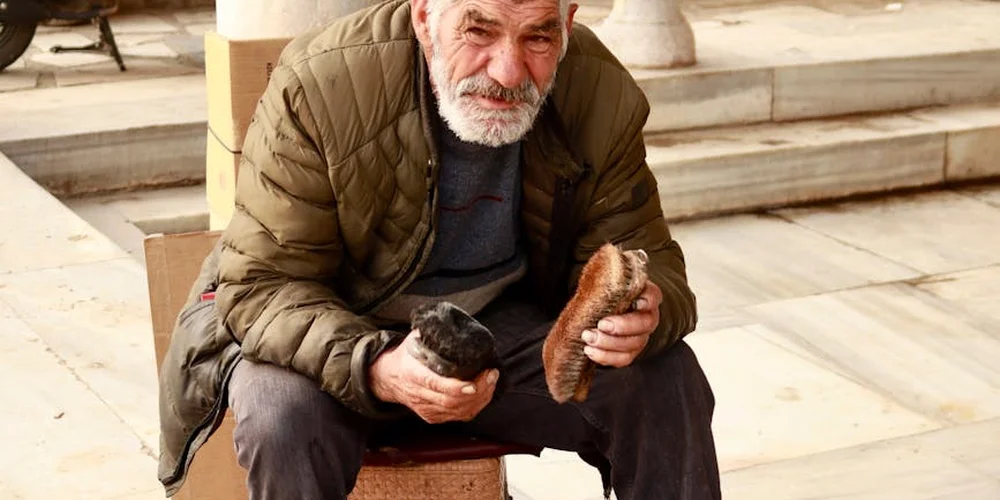
Your regular care kit is wonderfully minimal: a soft horsehair brush, a clean, lint-free cotton cloth, and time.
- Brush Away Dust: Before and after wear, give your shell cordovan item a thorough but gentle brushing with the horsehair brush. This lifts dust and minor grit from the grain. It is the single most effective step for maintaining a sharp appearance.
- Encourage the Shine: Shell develops its legendary gloss through friction and the natural migration of its internal oils to the surface. After brushing, take your dry cotton cloth and buff the leather in small, quick circles with medium pressure. For an even deeper shine, you can use a smooth deer bone or a dedicated glass slicker, following the same circular motion. You are not adding anything. You are polishing what is already there.
- Address Water Spots & Light Scratches: Rain happens. If your shell gets wet, let it air dry naturally, away from direct heat. Once fully dry, you will likely see a lighter water ring. Do not panic. Buff the area vigorously with your cloth or deer bone. The heat and friction from buffing will often coax the oils back to the surface, making the spot disappear. Light surface scuffs will also buff out this way.
If It Gets Soaked
Should your shell cordovan boots get caught in a downpour, its oil-tanned core is your best defense. Stuff them loosely with newspaper or shoe trees to help them hold their shape as they dry. Place them in a well-ventilated room at normal temperature. Never use a hairdryer or place them near a radiator. The leather is resilient, but rapid, extreme heat can damage any material. Let it dry slowly for a day or two, then return to your brushing and buffing routine.
The Reward: A Deepening Patina
This minimal care allows the leather’s true character to emerge. My old English saddle, Mason, has shell cordovan knee pads. After years of riding and consistent dry care, they do not look worn. They look wealthy. The color has deepened into a complex, glowing chestnut, and the surface has a hard, mirror-like shine that fabric simply cannot replicate. Scratches and rain spots have come and gone, leaving only a richer story behind. Your care does not fight the leather’s journey; it curates it, ensuring every mark leads to greater beauty, not decay.
Quick Answers
Can I use regular leather conditioner on my shell cordovan boots?
Absolutely not. Standard conditioners and oils will sit on the surface as a gummy film and permanently dull the finish. Shell cordovan is already packed with oils from its tanning; it only needs regular brushing and buffing with a dry cloth.
Why does shell cordovan develop rolls instead of creases?
Its dense, non-porous fiber structure from the horse’s rump simply doesn’t fold the way typical leather does. This inherent physical property is your guarantee it won’t develop unsightly cracks, only characteristic soft rolls that add to its charm.
Is the high price just due to rarity, or is there more to it?
Scarcity is just the entry fee. The true cost comes from the six months of hands-on labor, vegetable tanning, and meticulous hand-finishing. You are paying for the calendar and the artisan’s skill, not just the material.
How do I deal with a deep scratch or a stubborn water spot?
Buff it vigorously with a clean cotton cloth or a deer bone using firm, circular motions. The friction generates heat, which helps redistribute the leather’s internal oils to the surface, often making minor imperfections vanish completely. This is a common starting point when repairing general leather items. For a broader overview of the most effective methods to repair leather, we’ll cover them in the next steps.
Will my shell cordovan item last a lifetime?
Yes, with proper dry care. Its legendary durability comes from that dense shell membrane. Unlike other leathers that wear out, shell is designed to be an heirloom, developing a deeper, richer patina over decades of use. How long it lasts depends on factors like leather grade, finish, and how you care for it. Sun exposure, humidity, and daily use all influence its longevity.
Caring for Shell Cordovan Leather
From my work with pieces like Mason, I know shell cordovan’s tight shell resists wear like no other leather. Your main job is to preserve its natural oils with gentle cleaning and very rare conditioning.
I choose shell from tanneries that honor the animal through full use and ethical practice. Building your care skills ensures these premium goods age gracefully, becoming lifelong companions.
Deep Dive: Further Reading
- Shell cordovan – Wikipedia
- How Is Shell Cordovan Made? Horween Leather Company Explains | Stridewise
- Shell Cordovan Leather FAQs | What Is Cordovan Leather? | The Tannery Row | Leather Distributor
Harriet is a avid collector of leather goods such as purses, bags, seat covers, etc and has an extensive background in leather care, recovery, stain removal and restoration. She has worked for a number of years perfecting her leather care techniques and knows the ins and outs of restoring all kinds and types of leather products. With her first hand knowledge in leather care, you can not go wrong listening to her advice.
Boot and Shoe Care