Where to Buy Sheepskin Products and Mittens: A Leather Craftsman’s Advice
Published on: March 21, 2026 | Last Updated: March 21, 2026
Written By: Harriet Nicholson
Hello Tannery Talk. You want sheepskin mittens or a cozy rug, but you’re worried about finding the real thing for a fair price.
We will cover recognizing genuine sheepskin by its feel and scent, judging honest craftsmanship, supporting responsible sourcing, and finding sellers you can trust.
Having conditioned soft hides like June and restored worn pieces for years, I can help you shop with confidence.
What Exactly Is Sheepskin?
Think of sheepskin as a perfect, natural partnership. One side is a dense fleece of soft wool. The other is supple, durable leather. They are cured and tanned together as one complete material.
I often describe it to my clients by having them imagine their coziest blanket. Now, imagine that blanket is permanently and securely bonded to a thin, tough layer of leather. That’s sheepskin. The wool side provides incredible insulation and softness. The leather side gives it structure, strength, and shape.
When you’re looking at a sheepskin product, the quality of both sides tells the story. The wool should be full and resilient, not matted or sparse. The leather should feel flexible, not stiff or papery. It’s a material meant to last for decades with proper care.
I believe in knowing where materials come from. For sheepskin, I look for terms like “sustainably farmed wool” or “responsibly sourced.” These point toward better animal welfare practices. For the leather side, “full-grain” is a good sign of durability. A quality tannery takes care with both parts.
Where to Look for Sheepskin Goods
Finding genuine, well-made sheepskin is easier than you think. Your search will generally follow one of two paths: buying online or finding a physical store. Each has its own advantages.
Searching Online
The internet is your biggest marketplace. You can find everything from mittens to rugs. I break it down into three main types of online sellers.
- General Leather Goods Retailers: Many reputable leather shops carry a selection of sheepskin items, especially accessories like gloves, mittens, and seat covers. These shops often understand leather quality well.
- Specialty Sheepskin Shops: These are dedicated brands or websites that focus almost entirely on sheepskin products. They are fantastic for coats, slippers, and medical-grade sheepskin pads. Their expertise is usually very deep.
- Marketplace Platforms: Large online marketplaces host countless sellers. You can find great deals and unique items here, but you must be a detective. Read reviews closely, examine product photos for wool density and leather texture, and don’t hesitate to message the seller with questions about the source and tannage.
Buying online lets you compare materials, prices, and craftsmanship from across the globe from your home.
Visiting Physical Stores
Nothing replaces seeing and feeling the material in person. You can assess the handfeel, weight, and true color immediately.
- Tack & Equestrian Shops: These are my first stop for supreme quality. Sheepskin saddle pads, girth covers, and riding gloves are built for extreme durability and comfort. The sheepskin here is often top-tier.
- High-End Department Stores: Look here for fashion-focused sheepskin coats, jackets, and luxury home decor like rugs and throws. The selection is curated, but you pay for that service.
- Outdoor & Winter Gear Stores: This is a prime spot for practical sheepskin mittens, boot liners, and hats. The focus is on functionality and warmth for harsh weather.
Here’s a key tip from my experience. The type of store often depends on the specific item you need. Searching for “a sheepskin coat” will lead you to fashion and outerwear specialists. Searching for “a sheepskin rug” or “mittens” directs you to home decor or accessory specialists. Start your search with the specific product in mind.
How to Find the Perfect Sheepskin Mittens

Finding the right sheepskin mittens feels like a treasure hunt. You are not just buying gloves. You are selecting a partner for cold mornings and deep winter walks. The search is part of the joy.
Look at them like I look at a new piece of leather. Turn them inside out. Feel the seams. Judge the weight in your hand. This careful inspection separates a seasonal accessory from a decade-long companion.
Check the Construction First
How the mitten is built determines its lifespan and comfort. Start with the seams.
Seams on the outside of the hand will rub and wear faster, while seams tucked on the inside palm create a smoother, more durable exterior. It is a small detail with a big impact, much like the difference between a machine-stitched and hand-stitched edge on a bag.
Then, examine the cuff. A tall, snug cuff seals out wind and snow. A folded-over style, often with a toggle, is classic and adjustable. A simple banded cuff is lighter but best for casual use. Think about your jacket sleeves and what will fit underneath without bulk.
Understand the Wool’s Story
The density and length of the wool lining are everything for warmth. A thick, plush pile feels luxurious and traps heat beautifully. A shorter, denser pile can offer great warmth with less bulk, allowing for more dexterity.
When shopping online, you cannot feel it. You have to read the story the seller tells.
Look for descriptions that mention the wool’s density or weight in grams per square meter (GSM), as this is a concrete measure of warmth you can trust more than vague claims. A high-quality sheepskin will have a consistent, firmly attached fleece that does not pull out easily. Poorer quality feels patchy or thin in spots, like leather that was split too thin and lost its strength.
What “Origin” Really Means
You might search for terms like “buy sheepskin mittens Kerry Ireland online.” A specific region can signal a tradition of craftsmanship and sourcing. Areas with long histories of sheep farming and tanning, like parts of Ireland, the UK, or New Zealand, often have deeply ingrained skills.
But origin alone is not a guarantee. A brand name from Kerry does not mean every sheep was raised there or tanned there. You need to dig deeper.
When ordering from a specialist region, contact the seller with direct questions. Ask where the sheepskin was tanned and if they oversee the production. Responsible sellers who are proud of their supply chain will share this information readily, showing the same care I expect from a tannery I trust.
Remember, international shipping adds complexity. Check the return policy before you buy. A good company will have a clear process for returns if the fit or quality is not what you expected.
The Final Test: Fit and Feel
If you can try them on, do it. Your hand should feel instantly warm, not just insulated. Make a fist. The leather palm should have some give, like my old jacket June, not stiff like a new board. Can you pinch your thumb and fingers together? Some loss of dexterity is normal with mittens, but you should still be able to grip a dog leash or car key comfortably.
For online buys, study the sizing chart meticulously. Measure your hand. When they arrive, wear them around the house. The leather will soften and mold to your hand over time, just like a new wallet, but they should not cause pressure points or restrict blood flow from the start.
Finding the perfect pair takes a little patience. Look past the first pretty picture. Ask about the seams, the wool, and the story behind the skin. Your hands will thank you for years.
What Makes a Quality Sheepskin Product?
You know that feeling when you pick up a leather good and it just feels right. Sheepskin is no different. A quality piece speaks to you through your hands before you even check the tag. Let me walk you through what your fingers and eyes should be looking for when assessing sheepskin or lambskin leather for quality.
Reading the Hide with Your Hands
First, pick it up. A good sheepskin has a pleasing heft, a substance that comes from a dense wool pile and a robust leather backing. It should not feel thin or papery. Run your palm over the wool. It should feel lush and springy, not matted or greasy. A slight, natural lanolin scent is fine-it’s the sheep’s own weatherproofing-but a strong chemical smell is a red flag.
Now, look at the suede side, the leather backing. The color should be relatively even, a creamy tan or light grey. You might see subtle variations, which is natural, but avoid pieces with stark stains or blotchy dye marks. Gently flex the leather. It should be pliable and soft, not stiff like cardboard. A stiff backing will crack over time, while a supple one will move with you for years.
The Foundation: Leather Backing & Suede
This leather backing is the foundation of everything. Its thickness matters. A very thin backing might make a mitten feel floppy and it can tear easily. You want something with enough body to hold its shape and withstand stress. Think of the difference between a flimsy t-shirt and a sturdy canvas jacket. The sheepskin backing is your canvas.
The quality of this suede is crucial. It should feel uniformly soft and velvety. Rub your thumb across it. Low-quality suede will feel coarse, almost sandy, and you might see a cloudy “bloom” of loose fibers come off. High-quality suede feels dense and smooth. This backside needs to breathe and absorb conditioner, so a tight, fine grain is what you want.
The Wool: Density, Length, and Security
The wool is the star of the show. Look for density. Part the wool with your fingers and look at the skin. You should see a high number of wool fibers growing from a small area. Sparse wool means less warmth and quicker matting. The length can vary by style-shorter for sleek linings, longer for shaggy rugs-but it should be consistent across the piece.
Here’s the real test of quality: the anchorage. Take a few wool fibers between your fingers and give a very gentle, steady pull. In a well-tanned skin, the wool is rooted deeply; you should not be able to pull clumps out easily. If fibers come out with little effort, that wool will shed excessively over its life. I learned this the hard way with an old car seat cover that left more wool on my clothes than on itself.
How It’s Put Together: Construction Clues
For items like mittens or slippers, look at the edges. See how the sheepskin is joined. Is the wool side folded in, creating a smooth, enclosed seam? This is often called a hand-turned or fur-lined construction. It’s a sign of careful craftsmanship, trapping the wool inside for durability and a clean finish. The seam is almost invisible from the outside.
More common is a machine-stitched seam where the leather backsides are sewn together, leaving a visible stitch line and a ridge. This is perfectly functional, but run your finger along that inner seam. Are the stitches even and tight? Is the seam bulky, or has it been skived (thinned) so it lies flat against your skin? A rough, bulky seam in a mitten will become annoying fast.
These Rules Apply to Any Sheepskin Item
These aren’t just rules for mittens. They apply to every sheepskin product. Whether you’re judging a pair of sheepskin trousers, the best sheepskin slippers, or a vest liner, the checklist is the same.
- Handfeel: Good weight, springy wool, supple leather.
- Backing: Substantial thickness, fine, tight suede.
- Wool: Dense, securely anchored, consistent.
- Construction: Clean seams that are comfortable against the skin.
Investing in a piece that scores well on these points means you’re getting a companion that will age gracefully. It will handle cleaning better, last through more winters, and develop a patina of good memories, just like my old saddle Mason. A cheaper piece might look good on the shelf, but it won’t feel the same in your hands or stand up to real life.
When to Shop for the Best Sheepskin Deals
Timing your purchase is like waiting for the right moment to apply conditioner to a dry jacket. Do it too early, and you might not need it. Wait too long, and you’re dealing with a crack. For sheepskin, the best deals follow the cold weather.
Winter goods like mittens and coats have predictable sales cycles. The biggest discounts often hit right after the holidays in January and at the very end of winter, around late February or March. Stores are clearing space for spring items. This is when you can find genuine value on high-quality pieces.
You might search for things like “Black Friday sales” or “does Overland Sheepskin have sales.” Most reputable brands do run these promotions. Black Friday can be good for new styles, but the deepest cuts are usually on that post-holiday and end-of-season inventory.
How to Get Sale Alerts Without Regret
Signing up for a brand’s newsletter is the simplest way to get a sale alert. It’s a practical step. I do it for the brands whose leather I know and trust.
But here is the crucial part: a low price on poor-quality sheepskin is never a good deal. A cheap mitten made from thin, poorly tanned skin will wear out in a season. It won’t develop a beautiful patina like my old saddle, Mason. It will just look sad. Use sale periods to buy better quality for less money, not to justify buying something flimsy.
Where the Real Finds Are Hiding
Focus your clearance search on classic, simple styles. A basic natural sheepskin mitten or a traditional slipper is a timeless piece. Brands are more likely to discount these than a trendy, complicated design from this year’s collection. These classics are the workhorses of a wardrobe, just like Scout, my dependable wallet.
When you see a classic style on sale, check the product description closely. Look for terms like “full fleece” or “double-face.” Feel the product images with your eyes. You want to see a dense, uniform wool pile and a sturdy-looking leather side. That’s the foundation for a piece that will last for winters to come.
How to Care for Your New Sheepskin
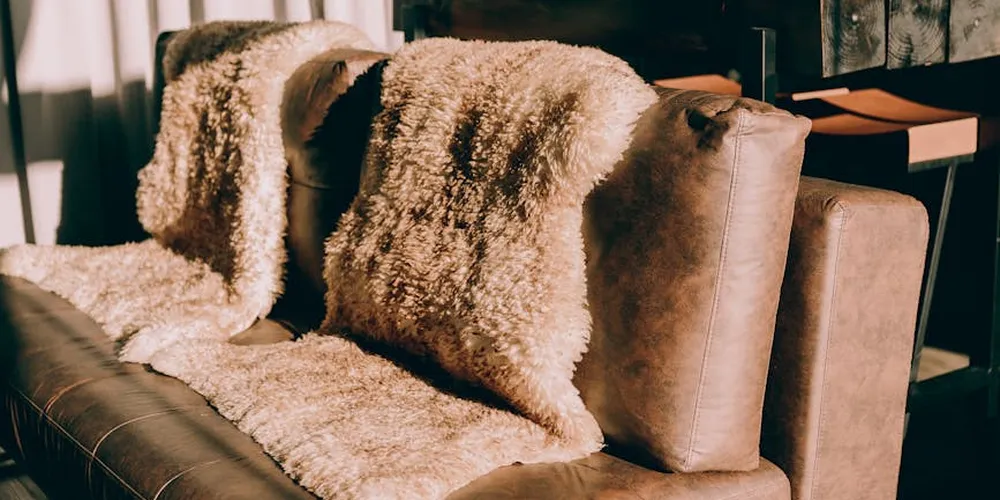
Caring for sheepskin is different from caring for my heavy-duty saddle, Mason, or my sturdy wallet, Scout. Its beauty comes from that dense, soft wool, and that’s what we need to protect. Think of it more like caring for a luxurious, living fleece attached to leather. With a simple routine, you can keep it soft and beautiful for years.
A consistent, gentle routine is the single best thing you can do to extend the life of your sheepskin.
Your Preventative Care Routine
Prevention is everything. A few seconds of care after each use stops big problems before they start.
- Gentle Brushing: After wearing mittens or using a rug, give the wool a light brush with a soft-bristle brush (a horsehair clothes brush is perfect). This removes surface dust and prevents it from settling deep into the fibers. Brush in the direction of the wool’s natural nap.
- Airing Out: Sheepskin needs to breathe. Don’t toss damp mittens in a closet. Hang jackets on a wide, padded hanger and lay rugs wool-side up in a well-ventilated area after use. This prevents moisture buildup and odors.
- Keep It Dry: This is the golden rule. Moisture is the enemy of the leather backing. If you’re caught in a light drizzle, air dry your item at room temperature away from direct heat. Never wear sheepskin in heavy rain.
What to Do If It Gets Wet or Stained
Accidents happen. I’ve saved June, my jacket, from more than one coffee splash. The key is to act calmly and never rush the drying process.
- Blot, Don’t Rub: For spills, immediately use a clean, absorbent cloth to blot the stain. Rubbing will grind it deeper into the wool and stretch the skin.
- Air Dry Naturally: Hang the item in a room with good air circulation. A fan on low speed in the room can help, but do not point it directly at the sheepskin.
- Avoid Heat at All Costs: Never use a hairdryer, radiator, fire, or clothes dryer. Intense heat will bake the leather, making it brittle and prone to cracking. It can also mat the wool fibers irreversibly.
- Brush Post-Dry: Once the item is completely dry to the touch, gently brush the wool to restore its fluffy texture.
Answering Your Sheepskin Care Questions
I hear this one all the time: Can you machine wash sheepskin mittens? The answer is a firm no. The agitation and heat of a washing machine will felt the wool (tangling it into a tight, hard mat) and almost certainly shrink and crack the leather. It’s one of the fastest ways to ruin them.
For a deep clean, seek out a professional cleaner who specializes in leather and suede. They have the tools and knowledge to clean the wool and condition the leather safely.
Choosing the Right Care Products
You don’t need a cabinet full of potions. One or two specialized products are all you require.
- For Cleaning: Use a cleaner specifically formulated for sheepskin or suede. These are usually foam-based and applied with a sponge. They clean without oversaturating the leather.
- For Conditioning the Leather: The skin side needs moisture too. Once a year, consider applying a light, non-greasy leather conditioner designed for nubuck or suede to the backing (always test on a small hidden area first). This keeps the leather supple.
- Your Toolkit: A soft horsehair brush, a white absorbent cloth, and your chosen specialist cleaner. That’s a great start.
How to Make Your Sheepskin Last for Years
Great sheepskin care is about more than cleaning. It’s about creating a simple, reliable routine for the times your mittens or slippers are resting. Think of it like putting your favorite leather jacket, my June, away for the summer. A little preparation prevents a lot of frustration later.
Long Term Storage and Protection
When you’re not using your sheepskin, its needs are simple: a stable, breathable home. The two biggest threats during storage are dryness and moths.
A cool, dry, and dark place with good air circulation is the single best thing you can provide for long-term sheepskin health. An enclosed closet is fine, but avoid plastic bags or airtight containers at all costs. Trapped moisture leads to mildew, which can ruin the leather backing.
For moth prevention, cedar blocks are a safe, natural choice. Avoid mothballs if you can. Their chemical smell can permeate the wool and is very difficult to remove. Before storage, always give your sheepskin a good shake and a gentle brush with a soft bristle brush to remove any dust or food particles that might attract pests.
Using Protective Sprays (The Leather Side)
This step depends entirely on what your sheepskin item is. For a slipper or mitten where the leather touches your skin, I rarely recommend it. For a shearling coat or boot where the outer leather face is exposed to rain and salt, it can be a smart shield. Protecting leather and sheepskin from moisture is crucial in such cases.
Use a spray designed for suede or nubuck. These are water-based protectants that won’t stiffen the leather or darken it noticeably. Always, always test the spray on a small, hidden area first, like the inside of a cuff, and let it dry completely to check the result. Apply it in a well ventilated area, hold the can about six inches away, and use a light, even mist. Let it dry for 24 hours before wearing or storing.
The Reward of Patina and Softness
With this basic care, your sheepskin won’t just survive, it will evolve. The leather will slowly darken and develop a character all its own, much like the rich patina on my old saddle, Mason. The wool will remain luxuriously soft because you’re not letting the skin underneath become brittle and crack. This personal patina is the story of your use, and it’s what makes a decades-old sheepskin piece feel irreplaceable.
Repairing Worn Cuffs and Seams
Even the best cared for items wear out where they get the most friction. A worn cuff on a mitten or a pulled seam on a slipper isn’t the end of the road. A skilled cobbler or leather repair shop can often work wonders.
For small seams, a flexible leather glue can provide a temporary fix. Apply a tiny dot to both sides of the opening, press together firmly, and wipe away any excess immediately with a damp cloth. Let it cure for a full 24 hours. For worn cuffs or thinning leather, a professional can often add a discreet leather patch or reinforcement from the inside. It’s a simple fix that can add years of life.
The goal is to care for the material so it ages gracefully. A simple repair down the line is just part of its long, soft life.
Common Questions
What’s the first thing I should do when my new sheepskin mittens arrive?
Immediately give the wool a gentle brush to lift the fibers and air them out for a day. This removes any packing compression and lets you assess the true handfeel and fit before the return window closes.
If I buy sheepskin mittens from a Kerry-based seller online, does that guarantee they’re better?
No, it does not. A Kerry label means the business is there, but the skin could be tanned elsewhere. Always ask the seller directly which tannery processed the hides to verify their quality claims.
What’s the single most damaging thing I can do to my sheepskin mittens?
Applying direct heat to dry them, like a radiator or hairdryer. This bakes the leather, causing it to shrink and become brittle, and will permanently mat the soft wool lining.
Can I treat the leather palm of my mittens to make them more water-resistant?
I don’t recommend it for the palm, as treatments can stiffen the leather you need to flex. If you must, use a light suede protector only on the back-of-hand leather and always test it on a small area first.
Final Thoughts on Finding Quality Sheepskin
When you’re looking for sheepskin, always start with the source and the material. Finding a maker or retailer who values transparency about their leather is the most reliable path to a product that will last for years. It’s also essential to understand the quality characteristics and common uses of lambskin leather.
Choosing a well-made item is just the beginning; caring for it with the right conditioners and proper storage honors the material. Building your knowledge of leather care is the best way to ensure your gear, like my jacket June or my saddle Mason, develops a beautiful character with age.
References & External Links
- Sheepskin Gloves & Mittens | Overland
- Women’s Sheepskin Mittens | Dents
- Women’s Gloves, Hats and Mittens | UGG® Official
- Sheepskin Mittens for Men and Women | Ultimate Sheepskin
- Genuine Sheepskin Gloves and Mittens|SheepskinTown.com
Harriet is a avid collector of leather goods such as purses, bags, seat covers, etc and has an extensive background in leather care, recovery, stain removal and restoration. She has worked for a number of years perfecting her leather care techniques and knows the ins and outs of restoring all kinds and types of leather products. With her first hand knowledge in leather care, you can not go wrong listening to her advice.
Jacket and Apparel Care