How Do You Pick a Leather Sofa That Lasts a Lifetime?
Published on: February 3, 2026 | Last Updated: February 3, 2026
Written By: Harriet Nicholson
Hello, Tannery Talk. You are ready to choose a beautiful leather sofa, but the price tags make you pause. You want this piece to stay comfortable and handsome for years, not just look good in a showroom.
Let’s find your perfect match together. We will cover decoding leather grades and types, judging hidden construction quality, and getting trustworthy brand guidance without the sales pressure.
My advice comes from years of conditioning, repairing, and learning the stories behind leather, from my dependable saddle Mason to my soft jacket June.
Is Leather or Faux Leather Better for Your Couch?
This is your first and biggest choice. It sets everything else in motion.
Think about a well-loved leather jacket, like my June. Over six years, her creases have softened into a map of memories. Faux leather, often called vinyl or pleather, does not do this. It sits on the surface. Real leather breathes. Its fibers relax and absorb conditioners. Faux leather is a plastic coating on fabric. It cannot breathe or absorb care.
For durability, real leather wins. A quality hide can last for decades with proper care. It develops a patina, a rich color change from use and light. Genuine leather can be repaired, from small scratches to full reupholstery, giving it a life measured in generations, not years. When it comes to bonded leather, repair options are typically limited and may not last, often requiring re-covering or replacement. Faux leather’s plastic coating eventually cracks and peels. This damage cannot be reversed, only covered up.
The feel is completely different. Real leather is cool to the touch initially, then warms with you. It has a subtle, natural scent. Faux leather often feels sticky in heat and has a chemical smell. It does not age, it just wears out.
When you choose real leather, you are choosing a natural material. I believe that choice comes with a responsibility to consider its origin. Look for brands that are transparent about their sourcing. Certifications for responsible farming and tanning matter. It is about respecting the animal and the craft, ensuring the leather in your home has a story that starts with care.
How Do You Judge Leather Quality and Type?
Once you choose real leather, you need to speak its language. Store labels can be confusing. Let’s break it down.
Start with the Grain: The Hide’s True Surface
This is about how much of the leather’s top layer remains untouched.
- Full-Grain Leather: This is the best. Think of it like unique, character-rich wood. The entire natural grain, with all its marks and variations, is left intact. It is the strongest part of the hide. Full-grain leather is the most durable and develops the richest patina over time, just like a favorite pair of jeans that only get better with wear. My wallet, Scout, is made from it. It will last a lifetime.
- Top-Grain Leather: This is very common for sofas. The very top surface has been lightly sanded to remove imperfections. It is then dyed and finished. It is more uniform in look and feel than full-grain and is still very durable. It accepts color finishes easily, making it versatile for furniture.
- Corrected-Grain Leather: This hide has more noticeable marks, so it is sanded down heavily. A thick, artificial grain pattern is then stamped onto it and a pigment finish is applied. It is very uniform and stain-resistant, but it will not develop a natural patina. The feel is more consistent, but less organic.
Understand the Finish: Color and Protection
The finish determines the look, handfeel, and how it handles spills.
- Aniline Finish: The leather is dipped in a transparent dye bath, letting the natural grain shine through. It feels incredibly soft and natural. Aniline leather shows the hide’s true character but is more susceptible to stains and fading, requiring a bit more thoughtful care. It is the most luxurious option.
- Semi-Aniline Finish: A light layer of protective pigment is sprayed over the aniline dye. This offers a compromise. You still see much of the natural grain and feel the softness, but you get better stain and fade resistance. It is a very practical choice for a busy home.
- Pigmented Finish: A solid, opaque coat of color is applied. This completely covers the natural grain, creating a uniform, consistent color. It is the most durable and stain-resistant finish, ideal for families or high-use areas. The feel is smoother and firmer.
Answering Common Questions
Is cowhide leather good for sofas? Yes. It is the most common and for good reason. Cowhide offers an excellent balance of durability, availability, and cost. It is strong enough for daily use and takes finishes well. Understanding its properties also means considering safe animal sourcing and welfare. Ethical sourcing practices help ensure the leather comes from humane, well-managed farms.
Is “Italian leather” a mark of quality? Not automatically. “Italian” refers to where the leather was tanned, not its grade. Italy has a legendary tanning tradition, so it can indicate high quality. But you can find superb full-grain leather tanned elsewhere, and you can find lower-quality leather tanned in Italy. Look beyond the country name to the grain and finish descriptions.
What Should You Look for Inside the Sofa?

Think of a sofa’s frame as its skeleton. If the bones are weak, the whole piece will sag and creak in a few years. You want a skeleton built to last.
The best frames use kiln-dried hardwood like oak, maple, or ash. This wood is stable, like a well-seasoned cutting board. It won’t warp or crack as your home’s humidity changes. Avoid frames made from softer woods or particleboard. They can’t handle the same stress over time.
How the corners are joined tells you everything about craftsmanship. Look for terms like “doweled,” “double-doweled,” or “corner-blocked” joints. These are reinforced with glue and blocks of wood, creating a locked-tight connection. Staples or simple glue joints won’t hold up.
Cushion Cores: The Heart of Comfort
Cushions are not all fluffy clouds. Their core determines if they’ll stay supportive or go flat.
- High-Resilience (HR) Foam: This is the industry standard for durability. Measured by density (you’ll see numbers like 1.8 or 2.0 pounds per cubic foot), higher density means longer life. It’s like a good mattress-firm support that slowly molds to you.
- Down Blends: A core of HR foam wrapped in a layer of down and feathers gives a luxurious, sink-in feel. It needs regular fluffing and will develop a lived-in look. Perfect for a relaxed style.
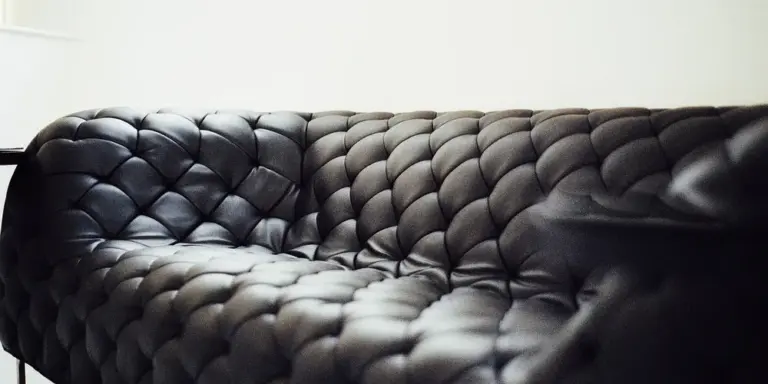
- Spring Cores (Innerspring): These are individual coils inside the cushion, similar to a mattress. They offer bouncy, firm support and are very durable, often found in traditional Chesterfield styles.
Suspension: What You’re Really Sitting On
Beneath the cushions is the suspension system. This supports your weight every single time you sit.
The gold standard is an 8-way hand-tied spring system. Craftsmen tie each coil spring to its neighbors in eight directions with twine. This creates a responsive, supportive base that moves with you and lasts for decades. It’s what you’ll find in heirloom-quality furniture.
A more common, cost-effective system is the sinuous spring (also called “no-sag” springs). These are long, S-shaped wires fastened to the frame. They provide good, consistent support and are quite durable for everyday use. Just know they offer a different feel than hand-tied coils.
How Do You Pick the Right Style and Size?
Style is personal, but size is practical. Get this wrong, and even the most beautiful sofa will feel like a mistake.
First, know your space. A massive Chesterfield with deep button tufting makes a grand statement but can overwhelm a small room. A low-profile, modern sofa like a Haven leather sectional can make a space feel bigger and airier. Recliners need extra space in front to fully extend.
Always, always measure. Twice. Use painter’s tape to mark the sofa’s footprint on your floor. This visual is priceless. Now, measure your doorways, hallways, and any tight stairwells. The sofa’s listed dimensions often don’t account for arm height or angled turns. I’ve seen perfect sofas get stuck in a foyer.
Consider the scale. Tall backs and high arms feel cozy and enclosed. Lower profiles and narrow arms feel open and modern. Think about how you live. Do you need a deep seat for napping, or a firmer, upright seat for conversation?
Which Brands Make Quality Leather Furniture?
Rather than trust a brand name, learn to read the story they tell in their specifications. A quality brand is transparent.
A long, comprehensive warranty is a brand putting its money where its mouth is. Look for lifetime warranties on the frame and spring systems, and substantial coverage (8-12 years) on the cushions. A one-year warranty is a red flag.
Look for specifics. Do they name the type of leather (e.g., “full-grain aniline”)? Do they state the frame wood and joint type? Do they list the foam density? This transparency builds trust. Some large brands, like Ashley, produce a wide range. Asking “is Ashley leather furniture good quality” depends entirely on the specific model’s construction details, which you must check.
Your best clues are in the details they choose to highlight-or omit.
How Do You Test for Real Comfort?

Don’t just perch on the edge. You need to simulate a real night in. Take your shoes off. Bring your partner.
- Sit Back. Do your shoulders meet the back cushion properly, or is there a gap? Does the back height support you?
- Check Seat Depth. Can you sit with your back flush against the cushions and still have a few inches between the seat edge and the back of your knees? Too deep and you’ll slouch; too shallow and you’ll feel perched.
- Feel the Armrests. Are they the right height to rest your arm naturally? Are they padded enough to lean on for reading?
- Test a Recliner. Operate the mechanism multiple times. Is it smooth? When reclined, is the lumbar support still good? Is the footrest solid?
Spend 10-15 minutes right there in the showroom. How does it feel after five minutes? That’s the real test. Consider your household: soft, plush leather is inviting for lounging, while a firmer, tighter grain offers more structured support.
What’s a Realistic Budget for a Good Leather Sofa?
A quality leather sofa is an investment in daily comfort for 15-20 years or more. The price reflects real materials and labor. To understand how long leather furniture lasts, consider the factors that determine its durability. Those factors include leather quality, construction, and maintenance.
You can find small sofas in bonded leather (which is a laminated material containing some leather fibers) for under $1,000. They serve a purpose but won’t age or wear like real leather.
For a genuine leather sofa with a solid hardwood frame and decent construction, expect to start around $2,500 to $4,000. This tier will often use a good top-grain leather and reliable sinuous spring suspension.
For premium full-grain or aniline leathers, with 8-way hand-tied springs, higher density foams, and meticulous detailing, prices range from $5,000 to $8,000 and beyond. You are paying for materials and the hundreds of hours of skilled labor that go into it, just like a tailor-made jacket.
How Will You Care for It Over the Years?
This is where my time with pieces like Mason the saddle pays off. Leather furniture care is simple, consistent, and deeply rewarding.
A simple, regular care routine is the single biggest factor in how your leather ages. It prevents the need for major repairs later.
Start from day one. Keep it out of direct, harsh sunlight to prevent fading and drying. Blot any spills immediately with a dry cloth. Don’t use harsh chemicals or all-purpose cleaners.
Your maintenance routine should be gentle:
- Every week, dust it with a dry, soft cloth to remove abrasive particles.
- Every 6-12 months, use a leather-specific conditioner. A small amount of a pH-balanced product, rubbed in with a soft cloth, replenishes the natural oils that use and time deplete. This keeps the leather supple and prevents cracking.
- For deeper cleaning, use a leather cleaner first, then condition. Always test any product in a hidden spot first.
With this care, your leather won’t just last. It will develop a rich, personal patina that makes it uniquely yours. The color will mellow, the surface will soften, and every gentle crease will tell the story of your home. That’s the real finish line for any leather sofa buying guide—especially when you know how to properly maintain and condition leather couches.
How Do You Pick the Right Style and Size?
Choosing a style is about matching the leather’s personality to your life. Think of it like picking a leather jacket. My jacket, June, is soft calfskin for daily comfort. A big sofa is your home’s signature piece. It should fit your body and your routines.
Matching a Leather Sofa Style to Your Space
Start by looking at your room’s existing feel. Is it airy and light, or cozy and traditional? The leather you choose should be a natural partner.
- Modern & Contemporary: These styles love clean lines and minimal fuss. They often use full-aniline or semi-aniline leathers in neutral tones. A sleek, low-profile design like a popular Haven leather sectional lets the beautiful, natural hide be the star. This style is great for showing off the unique character of high-quality leather.
- Classic Chesterfield: This is the Mason of sofas. It’s built with structure, featuring deep button tufting and rolled arms. It often uses a slightly firmer, pull-up or protected leather that develops a glorious patina over decades. It commands attention.
- Sectionals: The ultimate in flexible, family-friendly seating. When choosing leather for a sectional, think about wear. A durable, top-grain or protected leather on high-contact areas (like seats) is a smart choice. It can handle movie nights and napping pets.
- Recliners: Comfort is king here. The leather must be supple and strong enough to handle constant flexing at the seams. Avoid very stiff, unfinished leathers. Look for a softer, semi-aniline or nubuck that feels broken-in from the start.
The Tape Measure is Your Best Friend
This step is non-negotiable. A beautiful sofa is useless if it can’t get through your door. I see this mistake often.
- Measure your room. Use painter’s tape to mark the sofa’s footprint on the floor. Walk around it. Make sure there’s space for walkways and other furniture.
- Measure every door, hallway, and stairwell the sofa must travel through. Note the narrowest point and the smallest ceiling height. Always compare these to the sofa’s height, width, and depth.
- Check the sofa’s delivery details. Some are built to assemble in the room (like many sectionals), which solves tight space problems.
Feeling the Scale: Size and Proportion
A sofa’s scale changes a room’s energy. A large, tall-backed leather sofa feels substantial and grounding, like a trusted anchor. It can define a large, open space. A low-profile sofa makes a room feel more open and airy.
Consider the ceiling height. A massive sofa under a low ceiling can feel overwhelming. Think about your own height, too. Your feet should rest flat on the floor when sitting back, and the seat depth should support your thighs without cutting into the back of your knees.
Your sofa should invite you in, not make you feel like you’re perching on a ledge or lost in a canyon.
Just like my compact wallet Scout fits perfectly in my pocket, your sofa should fit your space and your life, not just in inches, but in feeling.
Which Brands Make Quality Leather Furniture?
It is less about finding the perfect brand name and more about learning to read a company’s story through its furniture. A brand is a promise. Your job is to see if they keep it.
Think of it like this: you would not buy a car based only on its logo. You would check under the hood. A leather sofa is no different. You must look past the marketing and into the specifications.
How to Read a Brand’s True Colors
Forget the brand name for a moment. Look for these three signs of a trustworthy maker.
1. The Warranty: A Test of Confidence
A warranty is a company betting its own money that its sofa will last. A short, limited warranty often signals lower confidence in the materials and build. A robust, long-term warranty on the frame and springs suggests they expect it to hold up for decades.
A strong warranty directly reflects a brand’s belief in its own construction and material quality.
Check what is covered. Is it just the frame? Does it include the leather? How are repairs handled? The details tell the real story.
2. Transparency About Materials
Vague terms like “genuine leather” or “premium hide” are red flags. They hide more than they reveal. A quality brand wants you to know what you are buying.
Look for clear answers to these questions:
- What type of leather is it? (e.g., Full-grain, Top-grain, Corrected grain).
- What is the finish? (e.g., Aniline, Semi-aniline, Protected).
- Where is the leather sourced? (Country of origin can indicate standards).
- Is the entire piece the same leather, or is it split on the sides/back?
This is like the difference between a label that says “beef” and one that says “grass-fed ribeye.” Specificity shows care.
3. Construction Details: The Bones of the Sofa
How a sofa is put together determines how it will feel, sound, and age. Brands proud of their work will tell you.
Here is what to look for in the product details or ask a salesperson:
- Frame: Kiln-dried hardwood (like oak or maple) resists warping. Avoid frames made only of plywood, particleboard, or softwoods like pine.
- Joinery: Look for terms like “double-doweled,” “corner-blocked,” or “mortise-and-tenon.” These are strong, glued, and screwed connections. Staples alone are not sufficient.
- Suspension: Eight-way hand-tied springs are the gold standard for support and longevity. Sinuous (spring) coils are a good, durable alternative. Avoid webbing alone for a primary seat.
- Cushion Fill: High-density foam cores wrapped in down or fiber provide comfort that lasts. Ask for the foam density (higher is better).
Navigating Brand Names with Mixed Lines
Some large manufacturers produce a wide range of quality. This leads to common questions like, “Is a particular brand’s leather furniture good?” The answer is almost always: it depends on the specific model.
These brands often have different “tiers” or “collections.” One line might use full-grain leather on a solid hardwood frame. Another, lower-priced line from the same brand might use corrected leather on a composite frame.
You must evaluate the specific piece in front of you, not the logo on the tag.
Use the checklist above on the model’s spec sheet. If the details are not available, that is your first clue about its potential quality. A quality piece has nothing to hide.
Your Quick-Reference Evaluation Table
| What to Look For | Sign of Quality | Question to Ask |
|---|---|---|
| Warranty | Long-term (10+ years on frame), clear terms, transferable. | “Can you show me the full warranty details in writing?” |
| Leather Specs | States type (full/top-grain), finish, and sourcing. | “Is this fully aniline dyed, top-grain leather?” |
| Frame Construction | Kiln-dried hardwood, corner-blocked joinery. | “What specific woods are used in the frame?” |
| Suspension | Eight-way hand-tied or sinuous coil springs. | “What type of spring system supports the seat?” |
Choosing a brand is really about choosing a set of standards. The right brand for you is the one whose standards are written plainly in the specs, match your needs for durability, and give you confidence for years of use. Your future self, enjoying a well-made sofa a decade from now, will thank you for doing this homework.
How Do You Test for Real Comfort?
Sitting down for five seconds tells you nothing. A good leather sofa becomes part of your daily life, so you need to test it like you live with it.
Check the Seat, Back, and Arms
Start with the seat depth. Sit all the way back. Your back should rest against the cushions comfortably. Now, check the space between the front edge of the seat and the back of your knees. You want about two fingers of space there.
A seat that’s too deep will leave your legs unsupported, forcing you to slouch. One that’s too short feels perched and stiff, like you’re in a waiting room.
Next, feel the back height. It should support your entire spine. If you like to lean your head back, the top of the sofa back or any attached pillows should cradle your neck without pushing your head forward. Think about my old saddle, Mason. It fits the horse perfectly; your sofa should fit you the same way.
Don’t forget the armrests. Press on them. Are they padded enough to rest your elbow on while reading? Run your hand over the leather. The armrests get constant contact, so the leather here needs to feel good and be durable.
Give It Time in the Showroom
Do not rush. Plan to spend a full 10 to 15 minutes on the floor model. Sit in every spot you might use at home-the center, the chaise, the corner.
Try different positions: sitting upright, lying down, curling up with a book. Listen to the frame. A well-made piece will be solid and quiet. A poorly made one might creak or shift under your weight. Feel the cushions. Do they spring back when you get up, or do they stay compressed?
This quiet time reveals the true comfort and build quality you’ll live with for years.
Test Every Moving Part
If you’re looking at a recliner or a sofa with a sleeper, you must work the mechanism. Operate the recliner lever or pull-out bed at least five times.
It should move smoothly, without sticking or requiring a huge struggle. The motion should feel controlled and substantial, not flimsy. A jerky, noisy mechanism is a sign of future problems.
Match the Leather to Your Life
Finally, think about your household’s needs. This choice is like choosing between my jacket, June, and my wallet, Scout. One is soft and supple, the other is firm and structured.
Do you want a cloud-like sofa for deep lounging and movie nights? Look for soft, aniline or semi-aniline leathers. They feel incredible but may show wear patterns more readily, developing a patina like worn jeans.
Do you need something that holds its shape, offers more support, and resists scuffs from pets or kids? Look for a firmer, protected top-grain leather. It has more structure initially but will soften beautifully with age and proper care.
The right leather feels like an extension of your home’s rhythm, whether that’s gentle and soft or sturdy and resilient.
What’s a Realistic Budget for a Good Leather Sofa?
Let’s talk about money. A genuine leather sofa will cost more than a fabric or faux leather one. Think of it like the difference between a solid wood dining table and one made from particle board. You’re paying for the raw material, the skilled labor to work it, and a structure built to last.
Real leather is a hide from an animal, a natural material that requires careful tanning and finishing. Faux leather is a roll of plastic-coated fabric that mimics the surface of real leather but lacks its authenticity and durability. The process and the result are worlds apart. A quality leather sofa uses thicker hides, more durable stitching, and a stronger frame to support the weight and flex of the leather over time.
Breaking Down the Price Tiers
Your budget dictates the type of leather you can bring home. Here’s a straightforward look at what to expect.
| Price Tier | Type of Leather | What You’re Getting | Long-Term View |
|---|---|---|---|
| $500 – $1,500 | Bonded or “Reconstituted” Leather | Leather fibers glued onto a fabric backing, topped with a polyurethane coat. It looks uniform and feels plasticky. | This is not a forever piece. The top coat will crack and peel with regular use, often within a few years. It cannot develop a patina. |
| $1,500 – $3,500 | Top-Grain Leather | The top layer of the hide, sanded and finished with a protective pigment or aniline coat. It feels soft, looks consistent, and is very durable. | This is where quality sofas begin. With proper care, it will last 10-15 years or more. The finish protects against stains, but the leather will show gentle aging. |
| $3,500+ | Full-Grain or Premium Aniline Leather | The entire, un-sanded top layer of the hide. It shows the hide’s natural markings and feels supple. Aniline dyes let the character shine through. | This is an heirloom. Like my saddle Mason, it will develop a rich, unique patina with every scratch and crease becoming part of its story. It can last for decades. |
The price isn’t just for the leather you see, it’s for the foundation you don’t: a hardwood frame, eight-way hand-tied springs, and high-density foam that won’t sag in five years.
Shifting Your Mindset from Cost to Value
Don’t think of this as a furniture purchase. Think of it as a long-term investment in your daily comfort. A cheap sofa might last you 5 years. A well-made leather sofa can be with you for 25.
I’ve conditioned June, my leather jacket, for six years. She gets softer and better with age. A great sofa does the same. The initial cost, spread over two decades of use, becomes a few cents a day.
Quality leather asks for little in return: a gentle cleaning and conditioning once or twice a year to keep the fibers nourished and prevent drying or cracking. When it comes to boots, you may wonder how often to condition them and what the best application method is.
That daily comfort, the durability for family life, and the beauty that deepens over time-that’s what you’re really budgeting for. You’re not buying a sofa you’ll replace. You’re choosing a companion for your home that grows old with you.
How Will You Care for It Over the Years?
Choosing the right leather is only half the story. The other half is the care you give it. I think of my pieces, like Mason the saddle or June the jacket, as companions. Their patina and comfort come from use and regular, simple care. A leather sofa is no different. With the right routine, it will look and feel better each year. It’s important to avoid common mistakes which can be harmful to the leather.
Your care plan is a simple promise: keep it clean, keep it fed, and keep it safe from harsh elements. This is the single biggest factor in how long your investment lasts.
The First 90 Days: The Settling-In Period
New leather needs a gentle start. The tannery finish is fresh, and the fibers are settling into their new shape with every sit. Your goal is to protect it while it breaks in.
- Keep it dry. Immediately wipe any spills with a soft, absorbent cloth. Don’t rub, just blot. Water itself isn’t the enemy, but letting liquid sit is. For my wallet Scout, a quick blot has saved it from coffee stains more than once.
- Avoid direct, harsh sunlight. Position your sofa away from windows where strong sun beats down for hours. Think of it like your skin. A little sun builds character, but constant exposure dries it out and fades the color prematurely.
- Let it breathe. Resist the urge to use any conditioners or creams for the first three months. The leather needs to naturally adjust to your home’s humidity and temperature.
The Ongoing Routine: Dusting and Conditioning
After the settling period, a basic maintenance rhythm is all you need. This isn’t a chore, it’s a quick connection with something built to last.
- Dust Weekly. Use a clean, soft microfiber cloth. A dry, gentle wipe removes the abrasive dust and grit that acts like sandpaper over time. I do this for June’s jacket every Sunday, it takes one minute.
- Clean Every 3-6 Months. Use a cleaner made specifically for leather. Avoid all-purpose sprays or household cleaners. They are often too harsh and strip the leather’s natural oils. Apply a small amount of a pH-balanced, neutral leather cleaner to a cloth, never directly on the sofa. Wipe in gentle circles.
- Condition Every 6-12 Months. This is the most important step. Conditioning replaces the natural oils that evaporate over time. Use a quality leather conditioner or balm. Apply a thin, even coat with your hands or a cloth, let it absorb for an hour, then buff off any excess with a dry cloth. Conditioning is what keeps the leather supple and prevents the dry, stiff feeling that leads to cracks.
How Care Defines Your Sofa’s Future
This simple routine directly controls three things: longevity, color, and feel.
Without conditioning, leather dries out. Dry leather loses its flexibility. When you sit, the fibers can’t stretch and give gracefully, so they crack. It’s like a dry leaf versus a supple one. Regular feeding prevents this completely.
Dusting and proper cleaning preserve the color. Grime gets ground into the pores, dulling the finish. Gentle cleaning lifts that away, letting the rich tone shine through. Avoiding harsh sun prevents that faded, bleached look.
Finally, the feel. A well-cared-for leather sofa develops a deep, personal patina. It gets softer and more comfortable, molding to your life. My saddle Mason isn’t just dark brown, he’s a map of years of rides and care, and he’s softer now than when I got him. That’s the goal for your sofa. It starts as a beautiful piece of furniture and becomes a part of your home’s story. The process of developing this patina is what truly sets leather apart.
Quick Answers
How often should I really condition my new leather sofa?
Wait at least 90 days for the tannery finish to fully settle. After that, condition it every 6 to 12 months with a pH-balanced leather conditioner. More frequent conditioning is wasteful and can soften the leather too much.
What’s the best way to handle scratches or scuffs?
For minor surface marks, gently rub the area with a clean finger; the natural oils in your skin can often blend them away. For anything deeper, use a small amount of leather conditioner on a soft cloth to moisturize the area and minimize the appearance.
Are leather cleaning kits from the store safe to use?
Only use products specifically formulated for upholstery leather. Always test any cleaner or conditioner in a hidden spot first, like behind a cushion. Avoid all-purpose or silicone-based polishes, as they can clog the leather’s pores.
Can old, dry leather be saved from cracking?
If the leather is just dry and stiff but not yet cracked, multiple light applications of a quality conditioner can restore suppleness. Once the fibers have physically split and cracked, however, professional repair is needed.
Bringing Your Choice Home
The best choice starts with your hands, not a brand name. Look past the label, feel the grain, and ask about the construction.
Your care routine honors the material’s origin and extends its life for years. A simple, monthly conditioning session becomes a quiet ritual that deepens the leather’s character and your connection to a well-made piece.
Sources and Additional Information
- Pros and Cons of Getting a Leather Couch | Castlery US
- Which Kinds of Leather Sofas Last Longer?
- How Long Should a Leather Couch Last? Your Guide to Leather Sofa Durability-
- r/interiordecorating on Reddit: Owners of leather couch, do you regret it?
Harriet is a avid collector of leather goods such as purses, bags, seat covers, etc and has an extensive background in leather care, recovery, stain removal and restoration. She has worked for a number of years perfecting her leather care techniques and knows the ins and outs of restoring all kinds and types of leather products. With her first hand knowledge in leather care, you can not go wrong listening to her advice.
Furniture and Upholstery Care