How Do Leather Tanning and Finishing Processes Work? A Craftsmans Guide
Published on: March 18, 2026 | Last Updated: March 18, 2026
Written By: Harriet Nicholson
Hello Tannery Talk. If you have ever been unsure why your leather needs a specific conditioner or why some pieces age with grace while others stiffen, the answer often starts with how the hide was tanned and finished.
We will walk through the basics together. This article covers the two primary tanning methods, common finishing techniques that alter leather’s hand and appearance, and how these processes directly impact your care routine.
My advice comes from hands-on experience conditioning and restoring leather, from trusty saddles like Mason to everyday jackets like June.
What Is Leather Tanning, and Why Does It Matter?
Imagine salting a piece of meat to keep it from spoiling. Leather tanning works on a similar principle, but for animal hides. It’s the alchemical process that transforms a raw, perishable skin into a durable, flexible material that won’t rot. Without tanning, your leather jacket or bag would decay in a matter of weeks.
The method used to tan the leather writes its entire life story. It decides how the leather will feel in your hands, how it changes color over the years, and most importantly for you, exactly how it needs to be cared for. Different tanning processes also affect the leather’s resistance to stains and damage. Getting to know your leather’s tanning is the first step to keeping it healthy for decades.
Vegetable Tanning vs. Chrome Tanning: The Core Methods
Think of these two methods as siblings with very different personalities. One is a patient, traditional craftsperson. The other is a versatile, modern innovator. The one used on your leather defines its character from day one.
Vegetable tanning uses natural tannins from tree bark, leaves, and fruits. The process is slow, often taking months. The result is a firm, dense leather that starts with a pale, almost blond color. This leather is alive. It darkens and develops a rich, personal gloss called a patina from the oils in your hands and exposure to light. My wallet, Scout, is vegetable-tanned. When new, it was a flat honey color. Three years later, it’s a deep, warm brown with darker spots where I always hold it. It has a distinct, earthy scent, like a forest after rain.
Chrome tanning uses chromium salts in a chemical bath. This process is fast, often completed in a single day. It yields leather that is incredibly soft, pliable, and water-resistant right from the start. The feel is more uniform, and the color is dyed through consistently. Many modern leather jackets, like my calfskin jacket June, are chrome-tanned. It was supple and a uniform dark brown from the beginning, ready to wear without a stiff break-in period.
Vegetable Tanning: The Traditional Craft
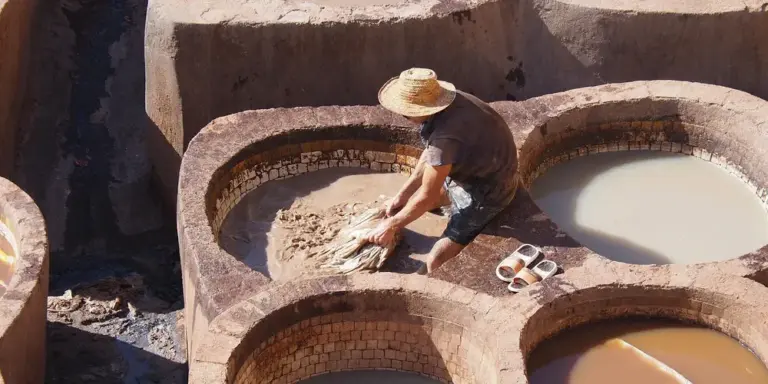
Let’s walk through how vegetable-tanned leather is born. First, the cleaned hides are soaked in pits or drums filled with a broth of water and ground tree bark (like oak or chestnut). They are left for weeks, sometimes months, as the plant tannins slowly bind to the hide’s fibers. This gradual penetration is what creates its strength and aging potential.
After tanning, the leather is dried, often by hanging. It’s then rolled and pressed to achieve the desired thickness and smoothness. This method has a strong eco-friendly reputation, as it relies on renewable plant materials and generates less chemical waste. The leather it produces is biodegradable and ages not by wearing out, but by wearing in, becoming more beautiful.
A common question I hear is, “Is vegetable tanned leather real leather?” The answer is an absolute yes. “Real leather” means the material started as an animal hide and was tanned to prevent decay. Vegetable tanning is one of the oldest definitions of “real” there is. It may feel firmer and look different from the soft leather on a sofa, but that’s a feature of its craft, not a lack of authenticity.
Chrome Tanning: The Modern Workhorse
The chrome tanning process is a marvel of modern efficiency. Prepared hides are submerged in a rotating drum with a bath containing basic chromium sulfate. The chromium molecules bond with the hide’s collagen fibers in hours, stabilizing them. This is called “blueing” because the chromium gives the wet leather a pale blue hue.
This speed and consistency make chrome tanning the dominant method today, accounting for most of the world’s leather. Its versatility is why you find it everywhere from sleek fashion jackets and comfortable shoes to durable car seats and furniture. Tanners can easily dye it any color and finish it to mimic various textures.
For care, this efficiency translates to less fuss. Chrome-tanned leather has its fibers already well-lubricated and protected by the tanning process. It typically requires conditioning less often than vegetable-tanned leather. Over-conditioning a chrome-tan item like a jacket can actually lead to a greasy feel, so a light hand with products is best.
Other Tanning Methods You Might Encounter
The world of leather goes far beyond vegetable and chrome. Several other methods create leathers with unique feels and purposes. You may own an item tanned one of these ways without even knowing it.
Alum (Tawing) and Aldehyde Tanning
Alum tanning, often called tawing, is one of the oldest methods. It uses aluminum salts. This process creates a very soft, porous, and pliable leather that’s brilliant white. Its downside is it’s not very water or heat resistant.
You’ll find alum-tawed leather in items that need to be supremely soft and flexible, like traditional kid gloves or some bookbinding leathers.
Care for these items is gentle. Use a pH-neutral cleaner and a light, non-greasy conditioner. Heavy oils or waxes can clog the pores and stiffen the leather, especially when used on delicate lambskin leather items.
Combination Tanning
This is exactly what it sounds like. Tanners use two or more methods on the same hide to get the best qualities of each. The most common blend is chrome and vegetable tanning, often called “retanning.”
Think of combination tanning like a hybrid car: it aims for the durability of chrome with the natural character and firmness of vegetable tan.
My watch strap is a good example. It has the initial strength and water resistance from a chrome tan but was retanned with vegetable extracts. This gave it a richer color and a firmer “handfeel” perfect for a strap. Care is usually straightforward. A universal leather conditioner works well on most combination-tanned goods.
Synthetic Tanning
Synthetic tannins, or syntans, are man-made chemicals created to mimic or replace natural ones. They offer incredible consistency and can produce a wide range of colors and finishes with great uniformity.
You’ll often see syntans used in leathers for shoes, handbags, and automotive interiors where a very specific, consistent color and texture are required. The leather on a modern car seat is likely the result of sophisticated synthetic or combination tanning.
These finishes can be delicate. Always test any cleaner or conditioner on a small, hidden area first, as some synthetic top-coats can be sensitive to certain chemicals.
A Note on Brain Tanning (A Historical Footprint)
Brain tanning is a traditional, ancient method where animal brains (rich in emulsifying oils) are used to soften and preserve the hide. It’s a skill of great craftsmanship, primarily of historical interest now.
You’re extremely unlikely to find a commercially available brain-tanned item today. It’s important to know about it, as it connects us to the long history of our craft, but you won’t need a care routine for it.
What This Means for Your Care Routine
When people ask “how to tan leather,” they’re often curious about DIY. The truth is, all these processes are complex industrial or specialized crafts. They require specific chemicals, controlled environments, and expertise to be safe and effective. To understand why it’s so complex, you need to look at how leather tanneries process hides.
Never try to “tan” or “re-tan” a dry leather item at home by soaking it in vegetable oil or other kitchen substances. This doesn’t tan the leather. It saturates it, leading to a sticky, rancid, and permanently damaged item. I’ve seen wallets ruined this way.
Your job isn’t to re-tan, but to maintain. Start by gently cleaning with a damp cloth or a dedicated leather cleaner. Follow with a conditioner suited to your leather’s type-a balm for dry vegetable-tan, a lighter lotion for a coated finish. This routine feeds the existing tannins and oils, preserving the work the professional tanner did.
The Finishing Touch: How Leather Gets Its Final Look
Tanning makes leather stable. Finishing makes it yours. The chemistry of tanning affects how leather ages and responds to care, which explains why care choices matter for durability. This is the final series of steps that decides the color, feel, and daily protection of your piece.
We can break finishing down into three main jobs: adding color, applying a protective coat, and creating the final surface texture. The choices here affect everything about how you’ll care for your leather down the road.
Leather Dyeing: Adding Color and Character
Dyeing is about getting color into the leather fibers. How deep it goes and what covers it up creates three main types of finish. Think of it like staining a piece of wood versus painting it.
- Aniline Finish: Here, transparent dye is absorbed deep into the hide. It shows the leather’s natural grain and markings beautifully. This finish, like on my saddle Mason, is loved for how it develops a rich, personal patina with every scuff and scratch. The trade-off is that it offers little protection from stains or fading.
- Semi-Aniline Finish: This is a practical middle ground. The leather gets a light aniline dye for rich color, then a very thin, clear protective coating. You still see the natural character, but with better resistance to spills and scuffs.
- Pigmented Finish: This method uses opaque colorants that sit on top of the leather, like paint. A durable topcoat is always applied over it. This creates a uniform, consistent color and a very protective surface, which is why it’s common on bags and furniture meant for heavy use.
Your care routine changes based on this. Aniline leather needs gentle, nourishing conditioners. Pigmented leather can handle more robust cleaners. Knowing which you have helps you choose the right products, especially when considering which hides stains better and is easier to repair.
Leather Coatings and Topcoats
After dye, a coating is often applied. This topcoat is the leather’s raincoat and sunscreen. It’s usually made from waxes, acrylics, or polyurethanes.
A thick, waxy polyurethane coat on a work boot makes it highly water-resistant and easy to wipe clean. A light acrylic coating on a dress belt gives a soft sheen and just enough protection for occasional wear.
Heavier coatings add durability but can crack over time if the leather underneath dries out, while light coatings let the leather breathe and age more naturally. A common mistake is using a wax-based conditioner on a leather with a plastic-based topcoat; it can’t absorb and just sits on the surface, feeling sticky. Always test a small area first.
Creating Texture: From Suede to Patent
The final step is creating the surface you feel. This is where leather gets its distinct personality.
- Suede & Nubuck: These are created by sanding the surface. Suede is sanded on the flesh side (the back), giving a soft, nap. Nubuck is sanded on the top grain side, resulting in a velvety feel. They are beautiful but thirsty; they drink up stains and water instantly, so they need specific protectant sprays from day one.
- Patent Leather: This is created by applying multiple layers of a plastic or lacquer finish until a high-gloss, sealed surface is achieved. It’s very protective but can be prone to scuffing and cracking along creases.
- Embossed/Grained Leather: Here, a pattern is pressed into the surface under heat and pressure. This can mimic exotic skins or create unique textures and adds to the leather’s visual durability.
Each texture demands a different care strategy. You brush suede with a special eraser and brush. You polish patent leather with a soft, dry cloth. This is why knowing your finish is the first, most important step in leather care.
How Tanning and Finishing Decide Your Care Routine
You don’t need to know every chemical a tanner uses. But knowing the basics of how your leather was made is the difference between guessing and knowing how to care for it.
Your leather’s tanning and finishing are its foundational recipe, and you must follow that recipe for proper care.
The Core Principle: Match Your Care to the Leather’s Build
Think of your leather goods like different types of wood. Vegetable-tanned leather is like a porous, unfinished oak table that soaks up oil and develops a rich glow. Its pores allow treatments to penetrate deeply. Chrome-tanned leather is more like a sealed teak garden chair-it resists water on its own but still needs protection from the sun. A heavy finish is like a thick coat of varnish; you clean it gently so you don’t strip it away.
- Vegetable-Tanned Leather: Loves and needs regular conditioning. It patinas with age and use.
- Chrome-Tanned Leather: More resistant to water and stains. Needs lighter, pH-balanced conditioners.
- Heavy Topcoats & Finishes: Require gentle, non-abrasive cleaners to avoid damaging the surface layer.
Caring for Vegetable-Tanned Leather (Like Mason)
My old English saddle, Mason, is veg-tan. This leather is tanned using natural materials like tree bark. It starts pale and stiffens as it dries, becoming incredibly strong. It is also very porous, which is why it darkens beautifully when you oil it.
Because it’s so absorbent, it loses its natural oils faster when exposed to sun, sweat, or dry air. Your goal is to replenish those oils.
Conditioning veg-tan is not optional; it’s preventive maintenance that keeps the leather fibers supple and strong.
- Clean Gently: Use a damp cloth or a mild, neutral leather soap. Avoid saturating it.
- Condition Generously: Apply a generous amount of a natural oil or wax-based conditioner (like a beeswax blend or pure neatsfoot oil). Rub it in thoroughly with your fingers or a soft cloth. The leather will drink it in and darken.
- Let it Breathe: Allow 24-48 hours for the conditioner to fully absorb and dry. The color will lighten slightly as it sets.
- Repeat: For items like saddles, bags, or belts used frequently, condition every 3-6 months. For display pieces, once a year may suffice.
A common mistake is being afraid to use enough product. If the leather feels stiff or looks dry a day after conditioning, it’s okay to apply a second, lighter coat.
Caring for Chrome-Tanned Leather (Like June)
My soft calfskin jacket, June, is chrome-tanned. This process uses chromium salts and is much faster. The result is leather that is very pliable from the start, more water-resistant, and available in a wider range of colors.
Its resilience is a strength, but it can be a weakness if you treat it like veg-tan. Over-conditioning with heavy oils can clog its tighter grain and leave a greasy film.
For chrome-tan, think “maintain” rather than “nourish.” You are protecting its surface and preserving its flexibility.
- Surface Clean First: Wipe with a dry, soft brush or cloth to remove dust. For stains, use a tiny amount of pH-balanced leather cleaner on a cloth.
- Use a Light Conditioner: Choose a milkier, water-based or very light oil emulsion conditioner. Apply a thin, even layer.
- Focus on Wear Points: Pay extra attention to high-stress areas like elbow creases or collar folds.
- Buff Off Excess: After 10-15 minutes, buff the entire piece with a clean, dry cloth to remove any unabsorbed residue. This prevents a sticky feel.
How the Finish Changes Everything
The finishing process is the final step, where tanners apply pigments, dyes, and protective layers to the surface. This is what gives your leather its final color and feel. Understanding how leather dyes work is crucial for appreciating the quality and durability of finished leather products.
A heavy topcoat (like on many corrected-grain leathers) is a durable, painted-on layer. It hides imperfections and is easy to wipe clean, but it can crack if the leather underneath dries out. Use gentle cleaners and avoid abrasive brushes that can scratch this film.
An aniline or semi-aniline finish (like on high-quality full-grain) allows the natural grain to show through with minimal pigment. It feels incredible but is more vulnerable to stains and fading. Use conditioners with UV inhibitors to reduce fading, and treat stains immediately.
| Leather Type | Feels Like | Core Care Need | Common Item |
|---|---|---|---|
| Full-Grain, Veg-Tan | Stiff, dry, porous; develops a patina | Regular, generous conditioning with oils/waxes | Belts, saddles, tooling leather |
| Full-Grain, Chrome-Tan | Soft, supple, slightly waxy | Light, periodic conditioning; surface cleaning | Jackets, gloves, handbags |
| Corrected-Grain (Heavy Finish) | Smooth, uniform, plastic-like | Gentle cleaning; very light conditioning to prevent cracking | Furniture, budget-friendly bags |
The biggest error I see is using one product on everything. A heavy wax that saves a dry work boot will ruin a delicate lambskin wallet. Start by identifying your leather’s type, then choose your cleaner and conditioner to match. Your leather will last decades, not just years.
Your Tanning Questions, Answered Simply
After talking about the processes, I often get a few specific questions. Let’s clear them up.
Can You Use Vegetable Oil to Tan Leather?
This is a common mix-up. The short answer is no, you cannot use vegetable oil from your kitchen to tan a hide. Vegetable oil is a conditioner for leather that has already been tanned, not an agent for the initial tanning process itself.
Tanning requires specific tannins, like those from tree bark, to permanently alter the protein structure of the skin and prevent rot. Pouring olive or coconut oil on a raw hide would not preserve it. It would likely go rancid, attract pests, and create a sticky mess.
Where the confusion happens is in care. A quality leather conditioner often contains natural oils to replenish what aging leather loses. Think of it this way: tanning builds the house, conditioning is the routine maintenance that keeps it standing strong.
How Is Leather Tanned? A Quick Recap
Let’s tie it all back together. Turning a raw animal skin into durable leather always follows a core path, no matter the method.
- Preparation: The hide is cleaned, hair is removed, and it’s made ready to accept tannins.
- The Tanning Bath: This is the key transformation. The hide is soaked in a solution that permanently changes its chemistry.
- For Vegetable Tanning, it’s a vat of tannin-rich tree bark and plant matter. This is a slow, traditional process.
- For Chrome Tanning, it’s a bath of chromium salts. This is a faster, modern process.
- Finishing: After tanning, the leather is dried, softened, and may receive color, wax, or a protective topcoat.
The method chosen in step two gives the leather its fundamental personality before any finish is applied.
Choosing Types of Leather Tanning for Beginners
Buying your first serious leather item? The tanning type is your best clue to how it will behave and age. Here’s my simple advice.
For a first piece you want to watch develop character, pick vegetable-tanned leather. My wallet, Scout, is a perfect example. It started a pale tan and has darkened to a rich brown from my hands alone. It’s like a blank canvas. It’s also easier to repair if it gets a scratch.
If you need something for daily, all-weather use, chrome-tanned leather is the practical choice. Think of a work boot or a bag you’ll use in the rain. It’s more immediately soft, water-resistant, and comes in many colors. My jacket, June, is chrome-tanned calfskin, which is why it was so supple right from the start.
Your decision often comes down to this: do you want to see the story you create with an item (veg-tan), or do you need reliable performance from day one (chrome-tan)?
Identifying and Choosing Leather for Long-Term Care

You can learn a lot about your leather just by looking and touching. You don’t need special tools. This is how I check every piece that comes into my workshop, from a briefcase to a belt.
How to “Read” Your Leather Goods
Start with your hands and eyes. A quick inspection tells you about the leather’s history and its future needs.
- Look for natural markings: Examine the surface in good light. Full-grain leather will show the hide’s natural texture-think small wrinkles, pores, or subtle scars. A perfectly uniform surface often means a heavy top-coat finish or corrected grain leather. My saddle, Mason, is covered in these natural marks; each one tells a story and will darken beautifully over time.
- Feel the surface: Run your fingers across it. Veg-tanned leather like my wallet, Scout, often feels firm and dry. Chrome-tanned leather, like my jacket June, usually feels softer and silkier right away. Notice if the surface feels waxy, oily, or like painted plastic. The handfeel guides what conditioner to use later.
- Check for labels and stamps: Look inside seams or on tags. “Genuine Leather” is a very broad term. Better stamps include “Full-Grain,” “Vegetable-Tanned,” or “Aniline Dyed.” If it says “Bycast” or “Bonded Leather,” manage your expectations for long-term patina and repair.
Trust what you see and feel more than a generic label; your senses are the best tool for understanding what you own.
Choosing Between Veg-Tan and Chrome-Tan Leather
This is the big choice. Each type ages differently and asks for different care. Think of it like choosing a companion for a long journey.
Vegetable-tanned leather is transformed using natural tannins from tree bark and plants. It starts stiff and lightens with sun exposure, developing a rich, personal patina from all your touches and spills. UV light and oxidation play a significant role in this aging process. Chrome-tanned leather uses mineral salts. It’s tanned faster, starts out softer and more water-resistant, and its color changes less dramatically over the years.
Your decision hinges on three things: the look you want, how you’ll use it, and the care you’re willing to give.
| Consideration | Vegetable-Tanned Leather | Chrome-Tanned Leather |
|---|---|---|
| Desired Patina | It ages dramatically. Colors deepen, edges darken, and scars tell a story. It’s a living surface. | It ages gracefully but subtly. The color stays more consistent, with softening and gentle creasing. |
| Durability & Use | Incredibly strong and stiff at first. Perfect for items that need structure, like belts, saddles, and tool sheaths. | Flexible and pliable from day one. Ideal for clothing, bags, and gloves where softness is key. |
| Care Commitment | Needs more attentive early care. Regular conditioning with oils or waxes is vital to prevent overdrying and cracking. | More forgiving initially. Clean with a damp cloth and use lighter, pH-balanced conditioners to maintain flexibility. |
Choose vegetable-tanned leather if you want an item that tells your story through visible change, and you’re ready for a simple but consistent care routine. Choose chrome-tanned if you need softness and water resistance from the start, with a lower-maintenance approach to upkeep. Each has its own benefits when it comes to care and sustainability.
Caring with Confidence
Knowing how your leather was tanned removes the guesswork from care. It empowers you.
When you know Mason is a veg-tan saddle, you understand why he needs a generous application of leather oil every few months to stay supple under stress. When you know June is a chrome-tan jacket, you reach for a light cream conditioner that won’t clog her pores or stiffen her. This knowledge turns maintenance from a chore into a conversation with a material you understand.
This simple understanding is what lets you build a care routine that truly works, ensuring pieces like yours last for decades, not just years.
Quick Answers
Which tanning method is most durable for a daily-use bag?
For pure water resistance and scuff recovery, a chrome-tanned leather with a robust pigmented finish is the practical choice. Its fibers are stabilized for flexibility and repel moisture from the start, requiring less intensive maintenance.
How can I tell what type of tanning was used on a vintage piece?
First, check for a pale, creamy flesh side or raw edge-this often indicates vegetable tanning. For a definitive test on an inconspicuous spot, a drop of water will darken veg-tan leather almost immediately, while chrome-tan will bead up or absorb much more slowly.
Do different finishes change how I should condition my leather?
Absolutely. A heavy pigmented or plastic-coated finish acts as a barrier; conditioners can’t penetrate it, so focus on gentle surface cleaning to preserve the topcoat. An aniline or semi-aniline finish is permeable, so use conditioners that can nourish the leather beneath.
Caring for Your Tanned Leather
The most important thing to remember is that how your leather was tanned dictates how you should care for it. Once you know if your piece is vegetable-tanned or chrome-tanned, you can choose the right cleaner and conditioner to protect it for decades.
Taking care of leather goods is a responsible practice, honoring the material and extending its life far beyond a disposable item. For ongoing maintenance advice and to deepen your leather care skills, trusted resources are built on hands-on experience with the craft. One such guide covers general methods for caring for and treating leather items.
Further Reading & Sources
- Methods of Leather Tanning | Buffalo Jackson
- Tanning (leather) – Wikipedia
- Tanning Leather: The Process of Tanning Explained
- Leather Tanning and Finishing Effluent Guidelines | US EPA
Harriet is a avid collector of leather goods such as purses, bags, seat covers, etc and has an extensive background in leather care, recovery, stain removal and restoration. She has worked for a number of years perfecting her leather care techniques and knows the ins and outs of restoring all kinds and types of leather products. With her first hand knowledge in leather care, you can not go wrong listening to her advice.
Vegetable-tanned vs. Chrome-tanned Care